Below you will find pages that utilize the taxonomy term “Investing”
Posts
read more
Investing in the 'AI Mafia': Why the Bricks Always Beat the Brains

Investing in the ‘AI Mafia’: Why the Bricks Always Beat the Brains
Most retail investors are currently obsessed with “The Brains”—the semiconductor companies like Nvidia or AMD. They see the sky-high margins and assume that because AI needs chips, chips are the best way to play the trend.
But sophisticated investors know that a chip without power is just an expensive piece of silicon. The real leverage in the AI revolution isn’t found in a cleanroom in Taiwan; it’s found in the dirt, the diesel, and the copper. It’s found with the “AI Mafia”: Caterpillar (CAT) and EMCOR (EME).
Posts
read more
The SaaS Trap: Why AI's Productivity Boom is a Deflationary Death Spiral for Incumbents
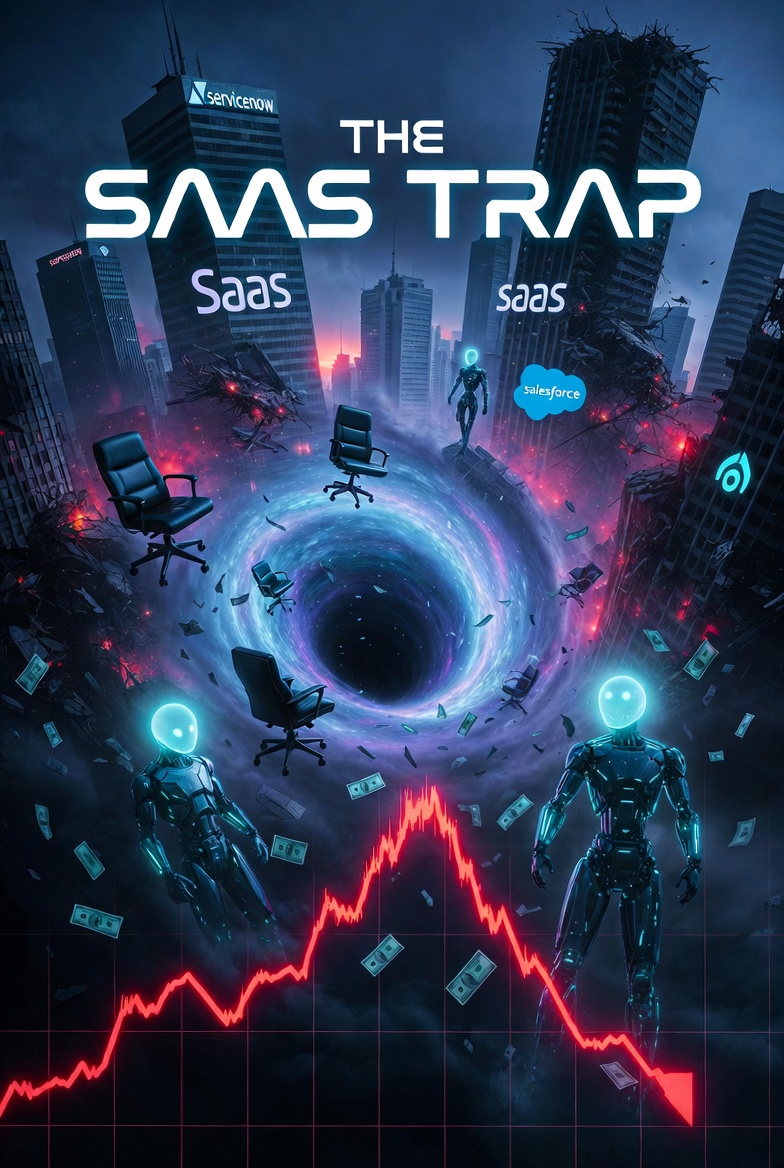
If you have been following my prior articles and videos at retailtrader.ai, you know we’ve been tracking the structural shifts beneath the AI hype. Recently on CNBC, ServiceNow’s CEO touted that AI is handling massive chunks of customer service workflows, suggesting companies won’t need to backfill human employees.
Wall Street is cheering this as a massive productivity tailwind. I am looking at it and seeing a deflationary trap that will eventually gut the legacy SaaS business model.
Posts
read more
Why What’s Happening in AI Is Not Unlike the 2016 Elections

Retail investors were taken for granted by VCs — just like certain elites took voters for granted in 2016. Now the backlash is building, and SpaceX is perfectly positioned to benefit.
I’ve been trading through this entire AI cycle, and the parallels to 2016 keep getting stronger.
For years the venture capital crowd ran the same playbook:
- Massive private rounds at insane valuations (Databricks at $134 billion after its latest big 2026 round, Anthropic pushing toward $380 billion, OpenAI in the $800 billion+ stratosphere).
- Kept companies private as long as possible to maximize marks and carry.
- Locked retail out completely.
- Then expected the public to show up and buy when they finally decided to IPO.
They took retail for granted — just like certain elites took voters for granted in 2016, assuming loyalty and that we had nowhere else to go. The result back then was a surprise shift. The same dynamic is playing out now.
Posts
read more
Is AI Killing SaaS? Why Software is the New Iron Ore and Copper
If you are worried about your SaaS company stock options or ESPP right now, you aren’t the only one. Many tech employees and investors are looking at their portfolios and wondering what comes next.
As a market practitioner, I’ve been tracking the severe hit SaaS companies are taking, and unfortunately, it doesn’t look like a temporary dip. In my latest video, I break down the macroeconomic conditions driving this correction and why the fundamental nature of software is changing.
Posts
read more
The Ugly Truth: The Real Casino: Why Private AI Markets Are the New Gambling Hub

While the public markets whip around on oil spikes, geopolitics, and Fed speculation, the mainstream narrative remains unchanged: Retail investors are the reckless “YOLO” crowd. We’re told they’re the gamblers, chasing memes and options with small stakes and full daily transparency.
Posts
read more
The Ugly Truth: Results Over Mission: How AI and Multidisciplinary Thinking Elevated My Trading Portfolio
A few days ago, I hosted a webinar where I spoke about the highly public collapse of my former company.
I learned the hard way that tangible results often matter more than blind commitment to a company mission—because let’s face the ugly unspoken truth: your mission statement goes out the window when your results don’t speak for themselves.
Below are screenshots from my E*TRADE account showing my performance and value views across the 6-month and 2-year tabs, alongside a snapshot of my verified Kinfo stats showing my win rate and profit across 131 trades.
Posts
read more
A Tale of Two Cities: Market Divergence & The 'Founder Incentive'
It’s been like a “Tale of Two Cities” in the markets recently.
On one hand, you have second-tier tech stocks getting decimated. If you are holding these, you see no hope, and you might be waiting years for them to bounce back—if they ever do.
On the other hand, you have stocks like Alcoa, Restoration Hardware, Occidental Petroleum, and Kratos Defense that have been absolutely flying nonstop. Just look at the Alcoa chart and you’ll see exactly what I mean.
Posts
read more
The Difference Between Tracking the Market and Beating It: A 6-Month Update
I posted a snapshot of my portfolio performance 60 days ago. Since then, the market (Orange line) has ticked up steadily. But my personal portfolio utilizing retailtrader.ai signals (Purple line) has widened the gap significantly.
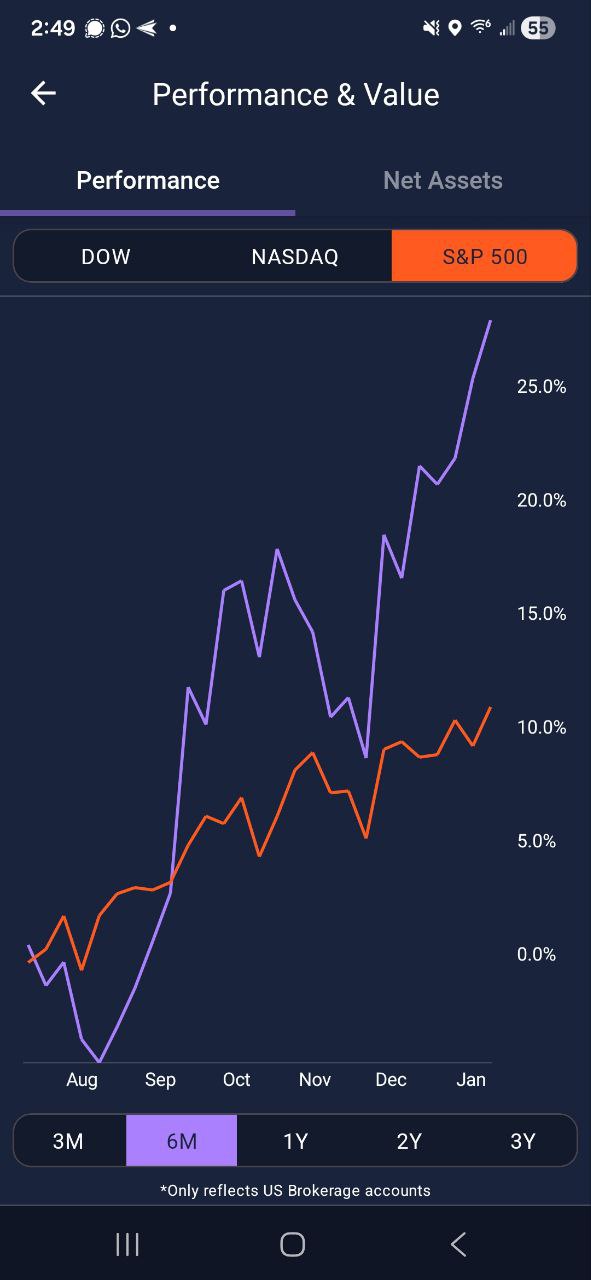 Figure 1: Performance comparison showing S&P 500 vs. My Portfolio over the last 6 months.
We are now looking at a +27% return over the last 6 months, compared to the market’s ~11%.
Posts
read more
Selectivity vs Volume: Why Selection is the Ultimate Force Multiplier
Selectivity vs Volume: Why Selection is the Ultimate Force Multiplier
In quantitative trading, the validity of a strategy is only as good as its constraints. At retailtrader.ai, we utilize an Exact Parity Simulator that treats our strategy with the same rigor as a professionally managed fund. Our latest results reveal a compelling narrative: algorithmic selection transforms raw market signals into institutional-grade alpha.
Context of Performance
- Out-of-Sample Data: These results represent live data tracked since our launch in Nov 2025, representing ~50 days. While the metrics are subject to short-term compounding due to the short time window, it demonstrates the general efficacy and the positive alpha of the methodology used.
- Normalization: We fully expect these extraordinary figures to normalize as market conditions shift.
- Live Signals: This simulation shows how the system would have performed if you followed the actual live signals delivered to our users since our launch in the real-world environment.
1. Experimental Design: The “Physics” of the Forward-Simulation Test
Most retail systems generate massive mental stress by forcing users to chase nanosecond ticks. We reject that model in favor of First Principles. Our architecture is specifically tailored for a “Fire and Forget” approach: